
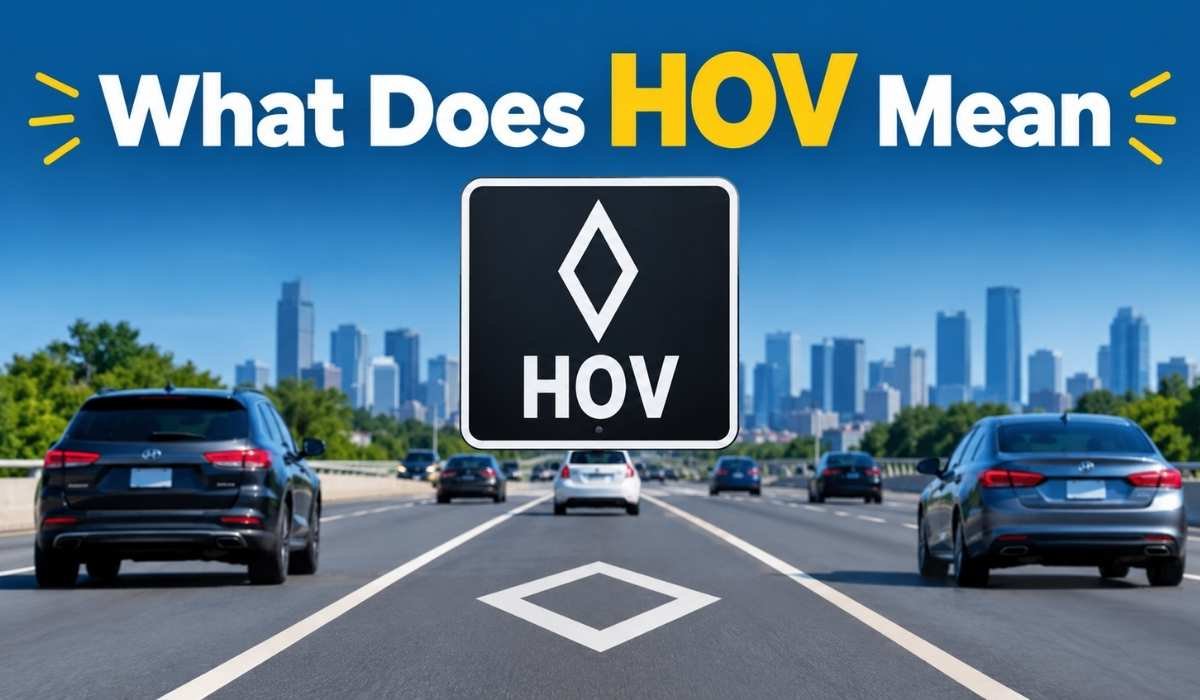

HOV stands for high-occupancy vehicle. It means a car, van, or bus that carries more than just the driver. You see the term on highway signs and road paint. An HOV lane is a special lane for shared rides. Solo drivers usually cannot use it. This guide explains the meaning, the origin, the rules, and real examples. You will also learn about fines, electric cars, and motorcycles.
HOV means high-occupancy vehicle. It is a vehicle with two or more people inside. Some lanes need three. An HOV lane is a faster lane for carpools, vans, and buses. It helps cut traffic. Solo drivers cannot use it in most places. Signs tell you how many people you need. A white diamond on the road also marks the lane.
What Does HOV Mean in Simple Words
HOV is short for high-occupancy vehicle. Occupancy means how many people are inside. So a high-occupancy vehicle has more riders than a car with only a driver.
Picture a family of three in one car. That car is an HOV. So is a van with five coworkers. In many places, a city bus counts too.
The idea is simple. More people in fewer cars means fewer cars on the road. In driving, the HOV meaning always points back to shared rides.
HOV Full Form and Part of Speech
The HOV full form is high-occupancy vehicle. Most people say each letter: H, O, V. Ask “what does HOV mean?” and most drivers will say “carpool lane.”
HOV is an abbreviation. It acts as a noun when you talk about a vehicle. It acts as an adjective when it sits before another noun, as in HOV lane or HOV sign.
You may also hear “Hov” as a nickname for the rapper Jay-Z. That is a different meaning. This article covers the driving term.
Origin and History of HOV Lanes
The idea grew from American traffic planning. The first freeway HOV lane in the United States opened in 1969 on Shirley Highway in Northern Virginia. At first, only buses could use it.
In December 1973, that busway opened to carpools with four or more people. Interest in ridesharing grew after the 1973 oil embargo. States began to test HOV lanes. In the 1970s, federal rules also began to allow federal money for these lanes.
In 1989, the Shirley Highway rule dropped to three or more riders. Since then, HOV lane usage in the USA has spread to many states and cities.
What Is an HOV Lane and How Does It Work
An HOV lane is a highway lane kept for vehicles with more than one rider. Many people call it a carpool lane. It often sits on the far left side of the road.
The lane works like a reward. Share your ride, and you may skip some slow traffic. Some lanes use barriers. Others use painted lines, with limited places to enter and exit.
These highway traffic rules are not the same everywhere. HOV lane rules depend on the state, the road, and the time of day. Always follow the posted signs.
HOV-2 vs HOV-3 Meaning
HOV-2 means you need at least two people in the vehicle. HOV-3 means you need at least three. The number is a minimum, so extra riders are fine.
Why the difference? Busy roads often need stricter HOV lane requirements. If too many cars qualify, the lane slows down and loses its purpose.
So how many people are required for HOV? It depends on the sign. Passenger occupancy requirements can also change by hour on some roads. Read the number before you merge.
What Does HOV Mean on Road Signs and Google Maps
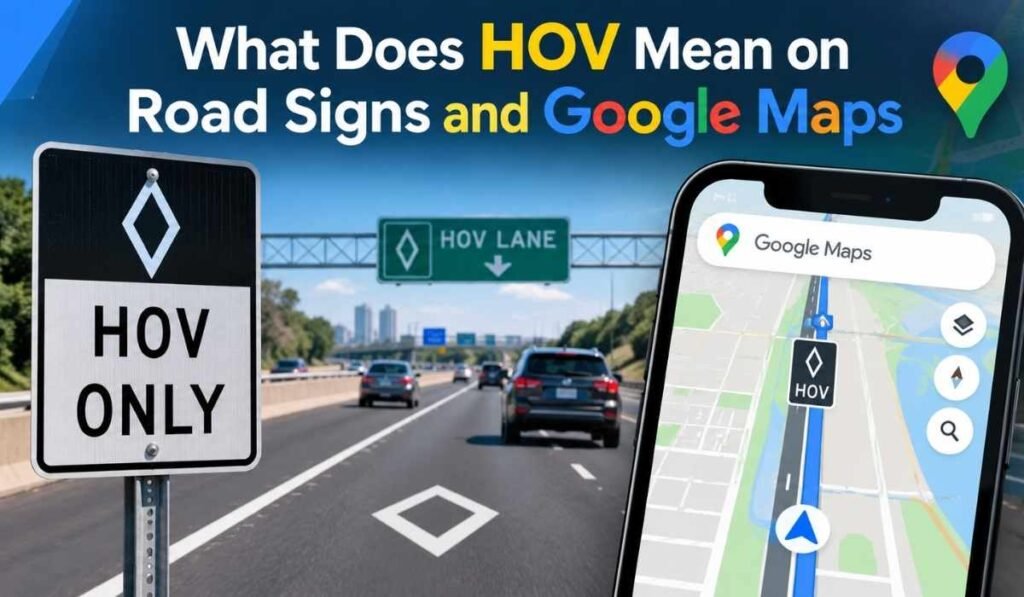
On the road, HOV appears on signs with a white diamond. The sign may say HOV 2+ or HOV 3+. The same diamond is often painted on the pavement.
Signs may also list hours, such as weekdays from 6 to 9 a.m. Read each line with care. Electronic signs may update during the day.
Apps like Google Maps may use the term HOV for these lanes. But an app is only a guide. The posted sign is the rule. If the two disagree, follow the sign.
When Can You Use an HOV Lane
HOV lane hours vary. Some lanes work all day, every day. Others apply only during rush hour traffic. Outside those times, any driver may be able to use the lane.
These HOV lane time restrictions appear on signs near the entrance. Some areas also change the rules on holidays.
So when can you use an HOV lane? Use it when the lane is open to you and you meet the passenger rule. Check the hours each time. Rules differ between states and even between highways.
Who Can Use HOV Lanes: Eligibility, Kids, Motorcycles, and EVs
Can you drive alone in an HOV lane? Usually no. Solo drivers stay in the regular lanes unless a special rule applies.
Do children count as HOV passengers? In most places, yes. A child is a person, so a child usually counts toward the total. Check your state if you have an infant.
Buses and vanpools often qualify. Motorcycles are allowed in many areas, but not all. Electric vehicles (EVs) may get access in some states, often through a decal or special program. Those programs can change or end. HOV lane eligibility is a local matter, so check current rules before you drive.
HOV vs HOT Lanes, Carpool Lanes, and Express Lanes
What does HOV mean compared with HOT? A High-Occupancy Toll (HOT) lane lets solo drivers pay a fee to use the lane. Carpools often ride free or at a lower price. Planners began adding HOT lanes in the 1990s.
Express lanes is a wider term. Many express lanes charge tolls that change with traffic. Some were built from old HOV lanes.
HOV vs carpool is simple. A carpool is the act of sharing a ride. An HOV is the type of vehicle. A carpool lane is just another name for an HOV lane.
HOV Lane Fines and Penalties
HOV lane violations can cost you. Police may watch these lanes in person. Some regions also use cameras or special teams. HOV lane enforcement is often tougher at busy times.
Fines vary widely by state. In some places, they can reach hundreds of dollars. Some states may also add points to your license.
Fake passengers, such as dummies or cutouts, are illegal in many places. Crossing solid lines to enter or exit can bring a ticket too. It is not worth the risk.
Benefits of HOV Lanes
The main HOV lane benefits are time and fairness. Carpoolers often move faster in rush hour. Fewer cars on the road can also ease traffic congestion.
Sharing rides cuts fuel use. That can mean emissions reduction over time. Buses that run in these lanes can stay on schedule, which supports public transportation.
Drivers gain too. Splitting gas and parking costs saves money. Shared rides can also make the trip more fun. Results vary by road, but the goal is clear.
Examples: What Does HOV Mean in a Sentence
Here are some simple examples.
- We need one more rider to use the HOV lane.
- Maya drove alone, so she stayed in the regular lane.
- The sign says HOV 2+ from 6 to 9 a.m.
- The bus zoomed past us in the carpool lane.
- Dad picked up two friends, so the car met the HOV-3 rule.
- He got a ticket for driving solo in the HOV lane.
Synonyms and Antonyms
The table below shows words with similar and opposite meanings.
| Type | Word or Phrase | Quick Note |
| Synonym | Carpool lane | Most common nickname |
| Synonym | Diamond lane | Named for the road symbol |
| Synonym | High-occupancy lane | Plain, longer form |
| Related | Ride-sharing | Sharing a trip with others |
| Antonym | Single-occupancy vehicle | One person in the car |
| Antonym | General-purpose lane | Open to all drivers |
Common Mistakes
Many drivers make the same small errors. Avoid these.
- Forgetting the driver counts. You are one of the riders.
- Thinking rules match everywhere. They do not.
- Cutting across solid lines. Enter only where the road allows.
- Assuming a toll lane is free for everyone. Pricing and rules differ.
- Ignoring the sign. The sign beats any app or habit.
How to Use an HOV Lane in Daily Life
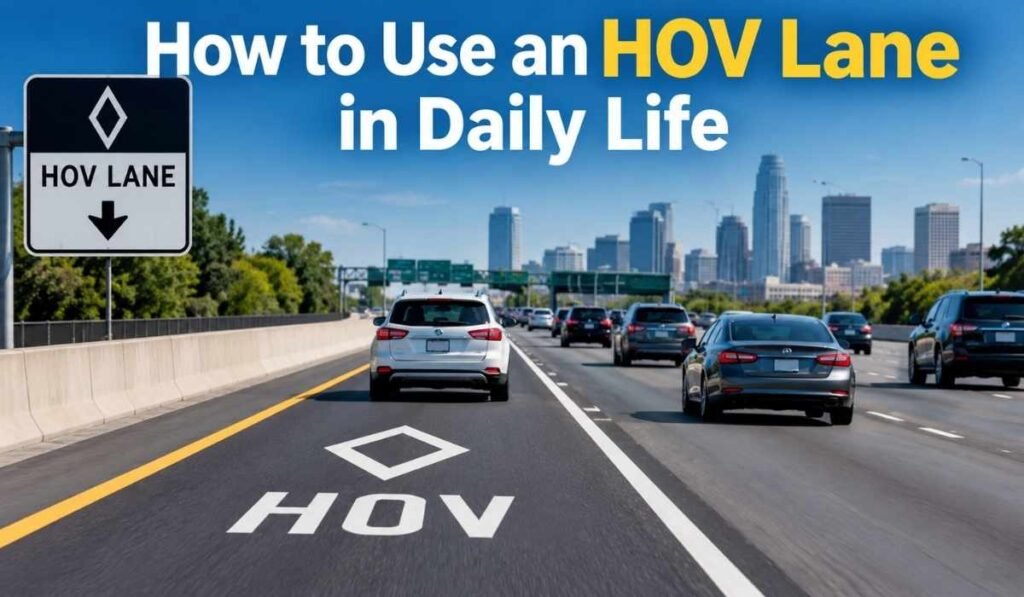
What does HOV mean for your daily drive? It means checking your rider count before you merge. Here is an easy routine.
- Read the sign for the number of riders and the hours.
- Count everyone in the vehicle, including you.
- Enter only at the allowed spots.
- Keep a steady speed with the flow of traffic.
- Exit where the road allows, and plan your exit early.
Good habits help carpool partners too. Pick a regular meeting spot. Share the gas costs. A small plan can save both time and money.
FAQs
What does HOV mean in driving?
It means high-occupancy vehicle. The term describes a vehicle with extra riders. It also names the lanes made for those vehicles.
Can you drive alone in an HOV lane?
Usually not. Some toll lanes allow solo drivers who pay. A few places also give special access to certain vehicles. Check local rules.
Is an HOV lane the same as an express lane?
Not always. An HOV lane focuses on rider count. An express lane may charge a toll, and the price may change with traffic.
Do HOV rules apply at night?
It depends. Some lanes apply all day. Others only apply at set hours. The sign near the entrance tells you which.
What should I do if I enter an HOV lane by mistake?
Stay calm. Exit at the next legal spot. Do not cut across solid lines. A ticket is possible, so learn the sign for next time.
Do ride-sharing trips count?
Passengers in the car usually count toward the total. Rules for commercial or ride-share drivers may differ. Check your local transport rules.
Conclusion
So, what does HOV mean? It means high-occupancy vehicle: a car, van, or bus with extra riders. HOV lanes reward shared rides with a faster trip. Rules change by state, road, and time of day. Read the sign before you enter. Count everyone in your car. Follow the posted hours. The simple takeaway: an HOV lane is for shared rides, so check the sign every time.

